The way people pay for things has changed more in the past five years than in the previous five decades. Cash is becoming a relic in many parts of the world, physical cards are losing ground to smartphones, and the humble QR code — once dismissed as a novelty — has quietly become one of the most important pieces of infrastructure in the global digital economy. Mobile wallets and QR code payments now touch virtually every corner of daily financial life, from buying groceries at a street vendor to booking travel, paying subscriptions, and funding accounts on digital platforms.
In India, this transformation has been particularly dramatic. Apps like PhonePe, Google Pay, and Paytm have brought hundreds of millions of people into the digital payments ecosystem, many of whom skipped traditional banking infrastructure entirely and moved straight to mobile-first financial tools. The Unified Payments Interface has demonstrated at scale what is possible when QR-based transactions are made universally accessible, processing billions of payments every month across a staggering range of use cases.
The reach of QR payments now extends well beyond retail. Entertainment platforms, subscription services, ticket booking systems, and online gaming platforms all support digital wallet transactions for fast, secure deposits and withdrawals. Sports betting platforms in particular have embraced this shift — users on exchanges like Skyinplay can fund and manage their accounts using mobile wallets and QR-based transfers, making the payment experience as seamless as the betting experience itself.
Understanding how these systems work, what makes them secure, and where the technology is heading gives you a significant advantage in choosing the right payment tools for your needs — whether you are a consumer, a merchant, or simply someone trying to navigate the increasingly cashless world of 2026.
How Mobile Wallets Actually Work
A mobile wallet is an application that stores your payment credentials — bank account details, card information, and available balances — securely on your smartphone and uses them to authorize transactions without requiring you to physically present a card or enter full account details each time you pay.
The most common wallet types fall into three broad categories, each serving different needs. Closed wallets are tied to a single platform or retailer, allowing payments only within that brand’s ecosystem — useful for frequent customers of a specific service but limited in broader utility. Semi-closed wallets, which include services like PayPal, work across a wide network of partner merchants but typically do not allow direct cash withdrawals. Open wallets, usually issued by banks or licensed financial institutions, offer the most flexibility — payments anywhere cards are accepted, bank transfers, and in many cases ATM access — making them the closest digital equivalent to a fully functional bank account in your pocket.
Security is the feature that has driven mainstream adoption of mobile wallets more than anything else. Several layers of protection work simultaneously to keep your financial data safe. Tokenization is one of the most important: rather than transmitting your real card or account number during a transaction, the wallet substitutes a unique digital token that is useless to anyone who intercepts it. Encryption ensures that all data transmitted between your device and payment processors is converted into unreadable code. Biometric authentication — fingerprint scanning or facial recognition — adds a final layer by confirming your identity before any payment is approved. And if your phone is ever lost or stolen, most wallet providers allow you to remotely lock or wipe your wallet data entirely, preventing unauthorized use.
The major global wallet providers each have their own strengths. Apple Pay integrates seamlessly across iPhones, iPads, and Apple Watch, enabling contactless payments at any NFC-enabled terminal. Google Pay serves Android users with a similar range of features alongside integrated loyalty cards and promotional offers. Samsung Pay extends its compatibility to older magnetic stripe readers in addition to NFC terminals, giving it a broader hardware reach. PayPal functions as both a wallet and a peer-to-peer transfer platform, making it one of the most versatile payment tools available globally.
QR Code Payments: Speed, Simplicity, and Scale
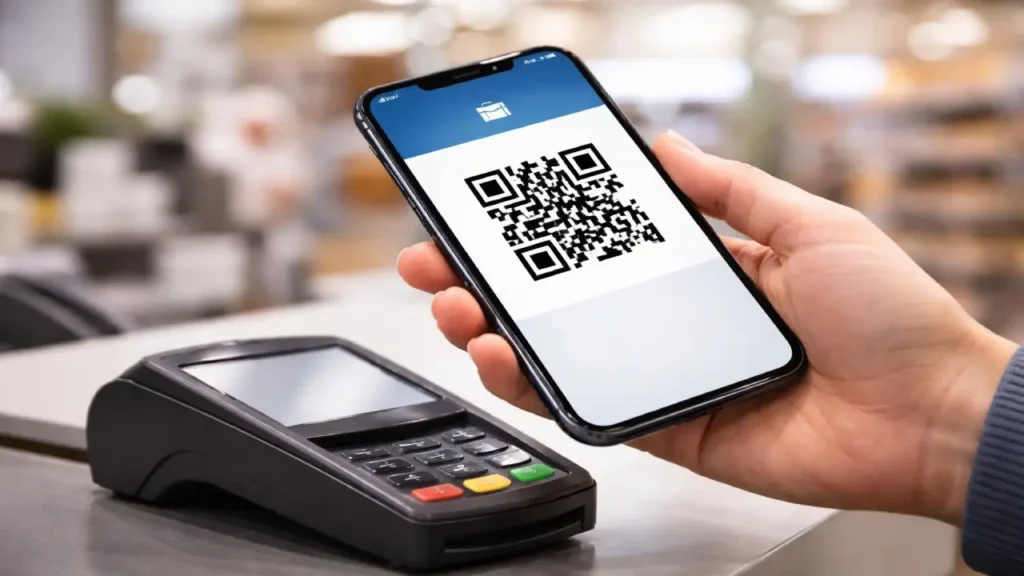
The QR code payment process is deceptively simple on the surface, but the technology behind it is sophisticated. When you open your wallet app and point your camera at a merchant’s QR code, the app reads payment information embedded within the code’s pattern — merchant identity, account routing, and in some cases the specific transaction amount — and presents it to you for review. You confirm with a PIN, fingerprint, or face scan. The payment clears through your bank or wallet balance in seconds, and both you and the merchant receive instant confirmation. The entire exchange typically takes less than ten seconds from scan to receipt.
There are two distinct types of QR codes used in payment environments, and the difference between them matters. Static QR codes contain fixed merchant information and require the customer to manually enter the transaction amount before confirming. They are simple to generate and cost nothing to deploy, making them popular for small vendors, tip jars, and donation points. Dynamic QR codes, by contrast, are generated fresh for each individual transaction and automatically embed the payment amount, order details, and a unique transaction identifier. This eliminates manual entry errors, improves transaction tracking, and makes reconciliation far easier for merchants processing high volumes. Most medium and large retailers use dynamic codes for exactly these reasons.
Security in QR payment systems relies on a combination of encrypted data transmission, user authentication at the point of confirmation, and real-time transaction monitoring by payment providers. One risk that users should be aware of is QR code substitution fraud, where a scammer places a fake code over a legitimate merchant’s code. The defense against this is simple but important: always check that the merchant name displayed in your app after scanning matches the business you are actually paying before confirming any transaction.
How Mobile Wallets and QR Payments Work Together
Mobile wallets and QR codes are not separate systems that happen to coexist — they are deeply integrated, with each making the other more powerful. The wallet provides the secure credential storage, authentication, and fund management layer, while the QR code provides the fast, hardware-light interface through which transactions are initiated.
One of the most significant advantages of this integration is accessibility. A merchant with a smartphone and a free payment app can generate a working QR code in minutes, with no card terminal, no expensive point-of-sale hardware, and no monthly fees. This has been transformative for small and micro businesses, street vendors, and informal economy participants who previously had no viable way to accept cashless payments. Larger retailers integrate QR payments into their existing point-of-sale and inventory management systems, often using dynamic codes that feed transaction data directly into their accounting software.
Cross-platform compatibility is another major strength of the QR payment model. Because standardized payment formats underpin the technology, a customer using Google Pay can scan the same merchant QR code as a customer using Apple Pay, PhonePe, or any regional wallet service. The payment gateway handles the translation between different wallet providers and banking systems invisibly. From the user’s perspective, the experience is identical regardless of which app they prefer — scan, confirm, done.
Emerging Technologies Shaping the Future of Digital Payments
The mobile payments landscape continues to evolve rapidly, with several technologies set to reshape what is possible over the next few years. NFC-based contactless payments — where you tap your phone or wearable device against a terminal rather than scanning a code — are becoming increasingly common alongside QR systems, and many modern payment setups support both methods simultaneously. Smartwatches and other wearables are now capable of authorizing payments independently, removing the phone from the transaction entirely for users who want maximum convenience.
Blockchain technology is beginning to influence the payments space in meaningful ways, particularly in terms of transaction transparency and fraud prevention. Tamper-proof transaction records on a distributed ledger could significantly reduce disputes and chargebacks, and several payment providers are exploring blockchain-backed QR payment infrastructure for high-volume or cross-border use cases.
Super-apps — platforms that combine messaging, social features, shopping, financial services, and payments in a single application — are expanding aggressively in Asia and beginning to gain traction elsewhere. QR codes sit at the core of most super-app payment systems, serving as the universal interface that connects users to merchants, services, and peer transfers without requiring separate apps for each function. WeChat Pay and Alipay in China have already demonstrated how completely a super-app can replace traditional banking infrastructure for everyday financial needs.
Regulatory frameworks around digital payments are also tightening globally, which is broadly positive for consumers. Governments and financial regulators are requiring stronger data encryption standards, stricter anti-money laundering compliance, mandatory identity verification for higher transaction thresholds, and clearer dispute resolution processes. These requirements add compliance burdens for payment providers but create a significantly safer and more trustworthy environment for the hundreds of millions of users who rely on mobile wallets as their primary financial tool.
The direction of travel is clear. Mobile wallets are becoming more capable, QR payments are becoming more universal, and the friction involved in moving money — whether you are buying a coffee, splitting a bill, funding a gaming account, or sending money across borders — continues to fall. By 2030, cashless digital transactions are expected to account for the majority of all consumer payments worldwide, with QR codes and mobile wallets at the center of that shift.



0 Comments